
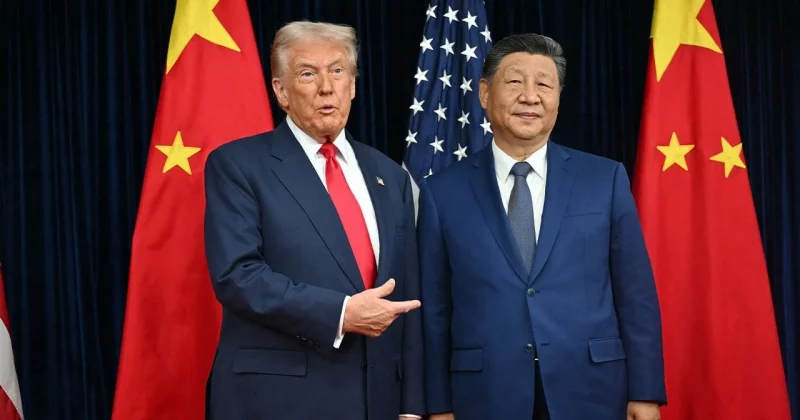
Donald Trump is in Beijing for what is being called the most important US-China summit in years, sitting across from Xi Jinping to negotiate terms of trade and cooperation on fentanyl and the ever-explosive Taiwan issue.
What is actually on the table
The primary agenda covers trade negotiations, cooperation on fentanyl trafficking, discussions regarding Iran, and a carefully limited conversation on Taiwan. Secretary Rubio has indicated that no major policy changes are expected.
Xi Jinping is said to be seeking to shift the language of US policy from “does not support Taiwan independence” to “opposes Taiwan independence.” In practical terms, the difference between passive non-support and active opposition would send a very different signal to Taipei, to Beijing, and to every government in the Indo-Pacific trying to read the tea leaves.
Taiwan officials are not thrilled. There are real fears that their national interests will be turned into a bargaining chip, traded into a broader bargain where economic concessions are more important than strategic commitments.
The White House insists that US policy on Taiwan has not changed, stressing that the summit focuses on economic discussions, not strategic ones.
Asian diplomats have warned of a possible arrangement between Beijing and Iran related to the Strait of Hormuz. The concern here is that cooperation on Iran could be linked to US concessions on Taiwan, which could lead to a comprehensive geopolitical deal linking the Middle East to the Taiwan Strait.
Why watch Asia’s cryptocurrency markets closely
Taiwan, Hong Kong, and Singapore form a triangle that accounts for a significant share of cryptocurrency exchange volume, blockchain development talent, and digital asset regulatory innovation in Asia.
If the summit results in closer cooperation between the United States and China on Iran, the dynamics surrounding sanctions enforcement may change. Blockchain analytics companies and compatible exchanges have built entire business models around the existing sanctions architecture. Restructuring this structure, even if partial, would change the compliance landscape for cryptocurrency companies operating across Asia and the Middle East.
What investors should actually be tracking
The first thing to watch is the language of the joint statement, specifically the Taiwan section. Any move from “does not support” to “opposes” independence would be a meaningful signal to assess market risks across the region.
Second, monitor any concrete framework on trade. Adjustments to tariffs or market access obligations will have direct impacts on cross-border capital flows, including on and off digital asset platforms.
Third, the Iranian dimension deserves more attention than it receives. If the summit produces a US-China agreement that touches on sanctions policy, the compliance infrastructure supporting institutional participation in the cryptocurrency space in Asia may need a major upgrade. This is a concern for practically every exchange, custodian and fund manager operating in the region.


