
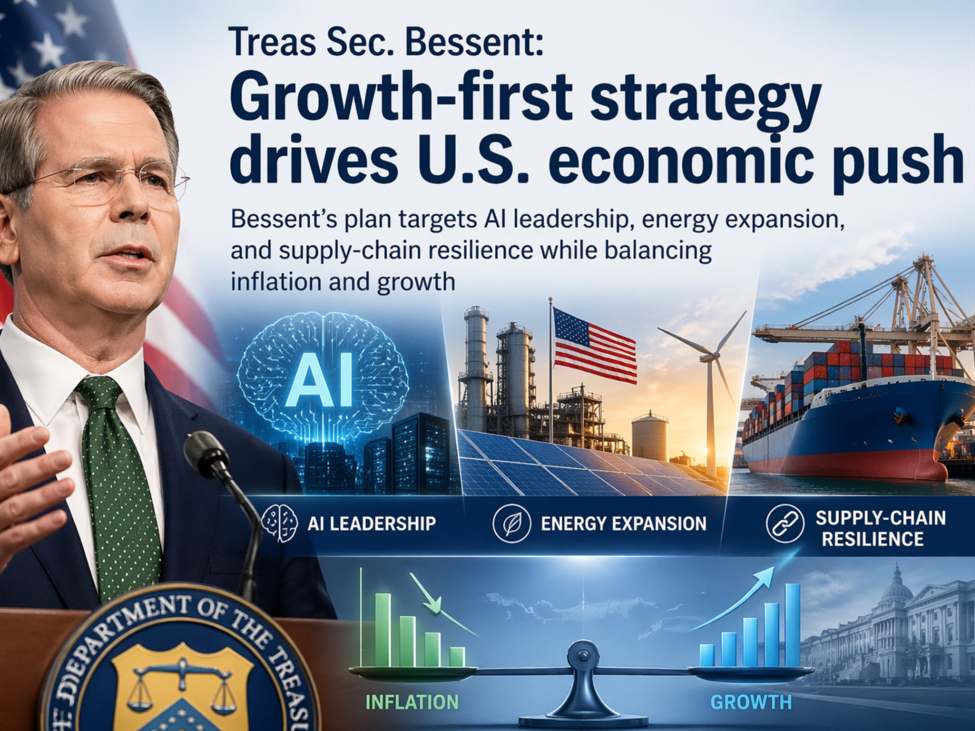
Scott Besant in an interview with the Wall Street Journal talks about… Main economic and political objectives He maneuvers through the Iran war and other global economic obstacles.:
-
The goal: to restore strong U.S. growth following the turmoil of war while keeping expansion intact
-
Balancing inflation against growth: Reducing inflation without stifling economic expansion
-
Raising real wages: Focus on improving income for the lowest 50% of income earners
-
Reasserting US dominance in key sectors: chips, artificial intelligence, and energy that are seen as vital to future prosperity
-
China Strategy = “De-risking, not decoupling” (maintaining trade while reducing dependency)
-
Targeted independence: Prioritize critical minerals, pharmaceuticals and semiconductors to enhance local resilience
-
Using leverage in trade tensions: tariffs, technology controls, and policy tools used to pressure China strategically.
-
AI is an existential priority: Winning in AI is essential or it will be economically “game over.”
-
AI policy approach: encouraging innovation with targeted regulation (chips and safety monitoring)
-
Increased productivity thanks to artificial intelligence: It is seen as a major driver of efficiency and economic growth
-
Energy strategy: higher prices → more production → self-correcting mechanism to reduce costs
-
Rebuilding Domestic Manufacturing: Reducing dependence on foreign supply chains and increasing economic resilience
-
Tax policy focus: Benefits targeted at low-income workers (for example, overtime tax credits)
-
Closing the wage gap in the age of inflation: Reclaiming purchasing power lost during the previous inflation surge
-
Criticism of bank regulation: Post-crisis rules favor large banks, creating a system that is “too small to succeed”
-
Topic of deregulation: Reducing burdens to enhance investment and competitiveness
-
Primary goal: combine taxes, energy, trade, and deregulation to achieve broad-based, sustainable economic growth
Bottom line:
At its core, this strategy is to support growth and support the supply side with the goal of strengthening American economic dominance by boosting productivity, rebuilding key industries, and improving outcomes for low-income workers. It balances inflation control with continued expansion, relies on energy and deregulation to drive investment, and uses targeted trade and industrial policies to reduce dependence on China without cutting ties completely. Artificial intelligence is positioned as a key driver of future growth, with the broader goal of aligning tax, trade and regulatory policies into a coherent framework that achieves broad-based, sustainable economic growth.


