
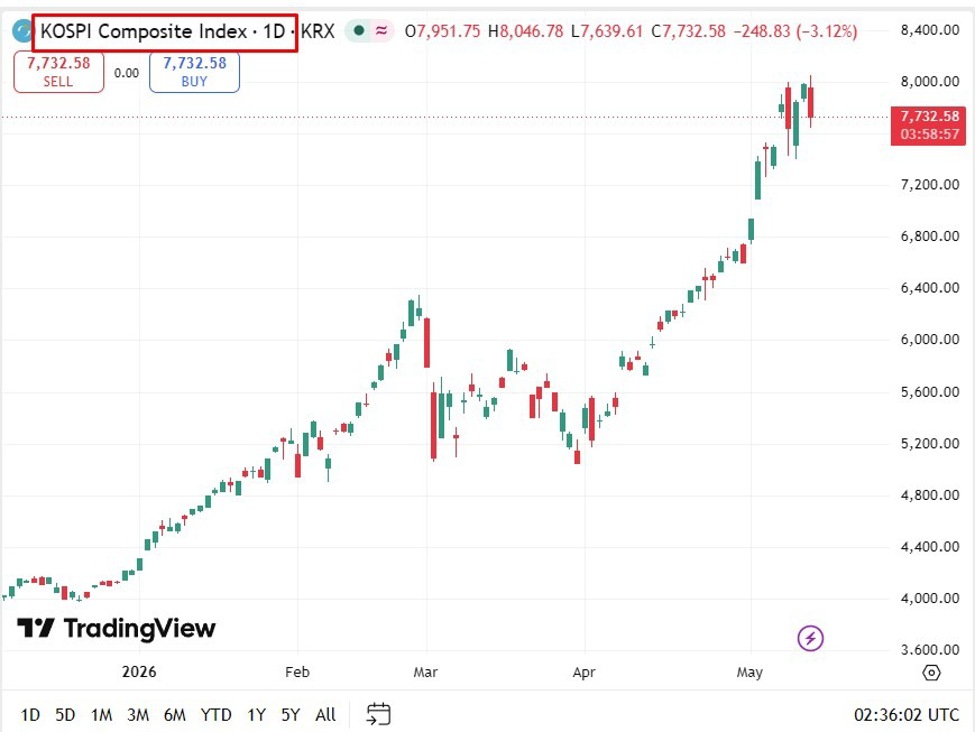
South Korea’s Kospi index reversed from a record high above 8,046 to fall more than 2% after Trump signaled waning patience with Iran, raising oil prices and dragging US stock futures lower.
summary:
- South Korea’s KOSPI reached an all-time high of +8,045 before retreating to fall more than 2%, though it remained on course for a sixth straight weekly gain, rising more than 3% for the week.
- Trump said in an interview with Fox News that he would not be more patient with Iran and that it was just a matter of time, urging Tehran to reach an agreement with Washington.
- Trump also suggested the possibility of burying Iranian enriched uranium but said he would prefer it removed
- Washington has reportedly informed Israel of the possibility of Trump ordering strikes inside Iran, with Israeli officials on high alert
- Oil prices rose as risks of geopolitical escalation increased, while US stock futures fell after Trump’s comments.
South Korean stocks swung sharply on Friday, erasing a historic rise to record levels after US President Donald Trump signaled a hardline resolve towards Iran, cooling risk assets and raising oil prices amid new fears of geopolitical escalation.
The KOSPI briefly touched an all-time high of 8,046.78 before reversing course to fall more than 2%, as Trump’s comments in a Fox News interview aired Thursday evening changed market sentiment. Despite the intraday reversal, the index remained up more than 3% for the week and is on track for a sixth straight weekly gain, a rally that carried it into historic territory before Friday’s sell-off.
Trump’s statements were clear. He said he would not be more patient with Iran and described the confrontation as a matter of time, and put pressure on Tehran to reach an agreement with Washington. He also addressed the issue of Iran’s stockpile of enriched uranium, suggesting that it could be buried but expressing a preference for its complete removal, comments that reinforced the impression that the president was willing to consider more aggressive options.
The market reaction was quick. US stock futures turned lower after the interview, with the South Korean market continuing losses in parallel. Traders directly cited Trump’s comments on Iran as the impetus for the reversal from record highs.
Adding to the concerns were reports that Washington had informed Israel of the possibility that Trump would order strikes inside Iran. It was said that Israeli officials will be on high alert this weekend in anticipation of a possible decision to resume military operations. These reports gave operational weight to what could have been read as negotiating rhetoric, and oil markets responded accordingly, rising as the risk of renewed conflict and further disruption of the Strait of Hormuz increased.
The episode highlights how sentiment remains delicately balanced across global markets, with record equity levels and persistent trading optimism proving vulnerable to sudden shifts in the geopolitical backdrop.
—
Trump’s comments represent a tangible escalation in rhetoric toward Iran, and have injected a new geopolitical risk premium into oil markets, which have risen with the prospect of resuming military action. Reports that Washington informed Israel of the possibility of strikes inside Iran, with Israeli officials on high alert, add operational credibility to what could be interpreted as negotiating pressure. Equity markets are right to reprice: a resumption of hostilities would further tighten the Strait of Hormuz, amplifying the supply shock that is already weighing on global inflation and growth. The sharp reversal in the Kospi from a record high shows how quickly risk appetite can shift when geopolitical headlines change.


