

short
- Google is reportedly developing a server chip called Frozen v2 that ports part of the Gemini architecture to silicon.
- Based on the reports, engineers expect six to ten times the efficiency of current TPUs and target deployment in 2028.
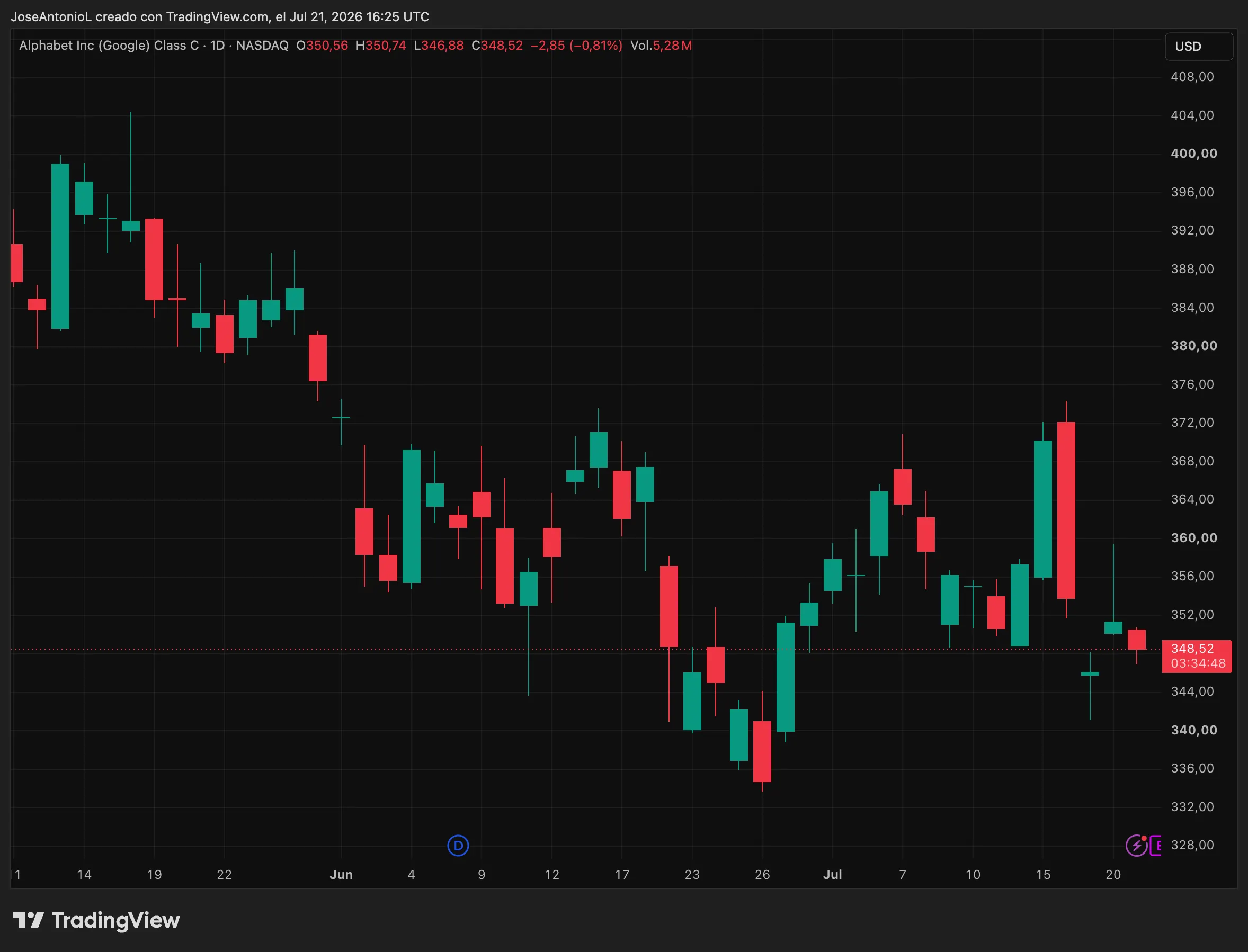
- Alphabet shares rose nearly 3% during Monday’s trading session after the news broke, ahead of its 2026 second-quarter earnings scheduled for Wednesday, July 22.
Google is building a chip designed for one job: to make Gemini run faster and cheaper.
The chip was codenamed Frozen v2 I mentioned the information on Monday and gives Google a potential answer to a problem it can’t get rid of fast enough: It’s running out of capacity to satisfy the AI demand it’s already generated.
In March, Google told Meta that it couldn’t fill the volume of Gemini Computing that Meta wanted to buy. Meta had to ask employees to ration their use of AI. Google — which has spent as much as $190 billion on AI infrastructure this year — was turning away customers because it didn’t have enough servers to serve them.
It is now building a chip designed solely for its AI models.
There’s not a lot of information about this new chip, but by naming convention, it doesn’t represent another upgrade to Google’s Tensor Processing Units (TPUs) — Custom chips that Google has been creating since 2015 Which powers Gemini and its cloud services for third-party developers.
These Tensor chips power any AI model loaded onto them. Frozen v2 does something different. According to reports, it integrates part of the Gemini architecture — the structural blueprint that defines how the model routes and processes information — directly into the hardware.
In machine learning, “freezing” means permanently fixing something in place. Here, what is frozen is the architecture, not the model weights (the actual knowledge Gemini picks up through training, which remains updatable). By wiring this scheme into the chip’s circuitry, the chip skips redundant calculations and stops moving data through memory on each query. Engineers expect a six- to ten-fold improvement in tokens — the small bits of text that make up each AI response — generated per watt of electricity consumed.
This is the difference between Google serving ten queries versus the energy cost of one query.
If you’re on Gemini, Frozen v2 won’t change how you feel. But it changes the cost of running it, and the cheaper-to-run Gemini Lab competes more with OpenAI, Anthropic, and Chinese labs that already account for up to 45% of AI token usage at US companies, largely because they operate 60% to 90% cheaper. You may not have a cheaper AI, but Google will likely be more profitable.
Alphabet shares rose nearly 3% during Monday’s session on the news, reaching $356 during the day. The company announces second-quarter 2026 earnings on Wednesday, July 22, and the pumping subsided in today’s session as investors await Google’s latest results.
This is another effort by a major AI company to end its over-reliance on Nvidia hardware to develop its products. Nvidia controls roughly 85% of the GPU AI market, and every major tech company wants out.
Nvidia’s hardware was originally designed for video games, not language models, it only works with the extra load that chips designed for that purpose can’t handle. At Google scale, the 6-10x efficiency gap is not abstract. It’s billions of dollars. Meta, Amazon, Microsoft, and OpenAI all have custom silicon software for exactly this reason.
As Decrypt reported in MarchEven AWS — which has committed to deploying 1 million Nvidia GPUs through 2027 — is building its own chips simultaneously to reduce this long-term exposure.
Frozen v2 is still exploratory. Key design decisions have not been finalized, Google has not confirmed the project’s existence, and the chip will not be offered to external cloud customers — hardware installed for one model cannot run any other. Deployment is scheduled for 2028 at the earliest, according to reports.
Meanwhile, Google is paying SpaceX $920 million a month to lease 110,000 Nvidia GPUs from xAI data centers as a bridge.
Daily debriefing Newsletter
Start each day with the latest news, plus original features, podcasts, videos and more.


