
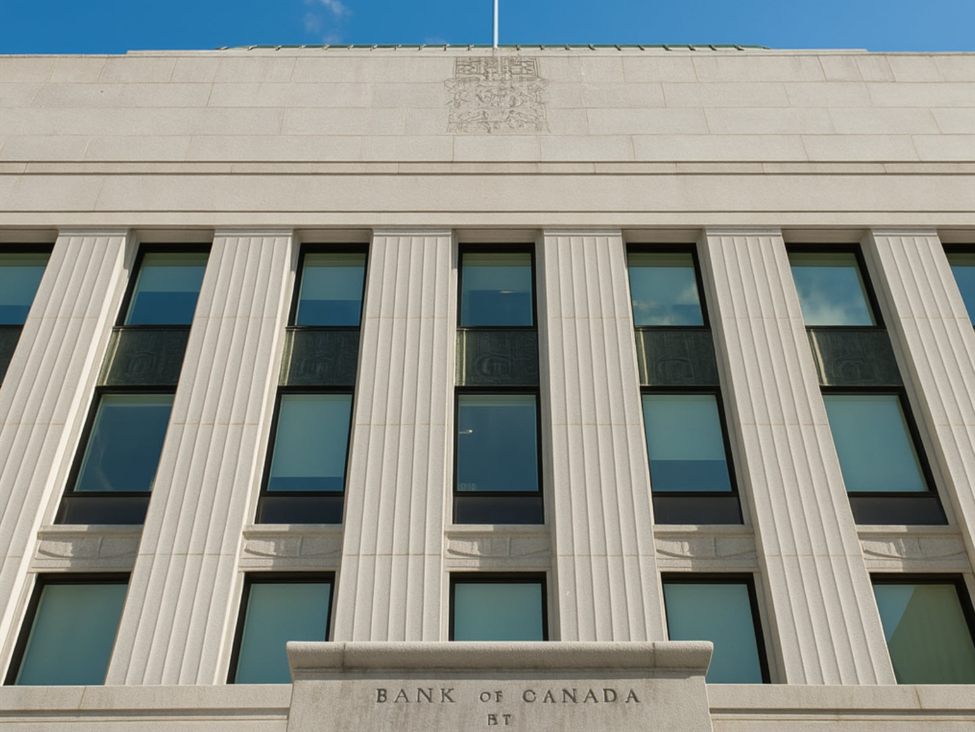
Here’s a poll that’s half good news, half old by the time it arrives.
The Bank of Canada’s Q1 Business Outlook Survey came out this morning and the headline is that business sentiment has almost recovered to where it was before Trump’s trade war began. Fewer companies are concerned about tariffs, sales expectations rise for the third straight quarter, investment intentions are the strongest since the start of trade tensions, and hiring intentions are returning to normal.
The share of companies planning or budgeting for a recession over the next 12 months collapsed from 22% to 9% — the lowest level since the question began being asked in 2023. This is a notable move.
The Dilemma: The bulk of the interviews ended on February 25, before the war in the Middle East began. So the Bank of Canada did what any good central bank does when events go beyond its main survey — it went back and made follow-up calls to 20 of the most at-risk companies from March 18-27.
From that, input costs really move in for anyone dealing with fuel, fertilizer, shipping or aluminum. Farmers are mostly good this planting season because they have already purchased fertilizer, but this represents a timing glitch, not a postponement. Transport companies say they can bypass higher fuel costs through contract terms. Most others are staring at margin pressure because demand is too weak, consumers are too exploited, and competition is too intense to drive prices cleanly.
Inflation expectations rose in the near future – driven entirely by companies surveyed in March after the war began. Longer-term forecasts range between 2.5% and 3%, broadly unchanged. So it is a story of an energy shock, not a reset of the inflationary system. At least not yet.
Some other nuggets worth flagging:
Wage growth expectations remain steady at around 3.5%, and companies expect wages to grow more slowly over the next 12 months than they did over the past 12 months. This is the kind of detail the Bank of Canada is really interested in.
Regarding the USMCA, which will get its first joint review on July 1, most companies see it as a risk and not something they are actively shaping near-term plans. But most also expect the review to leave Canadian exporters facing higher average tariff rates than they do today. Not exactly a vote of confidence.
Diversifying trade away from the United States remains mostly theoretical. A group of companies are heading to non-American markets, but the rest say either that it is not worth all the effort or that the transportation costs are not worth it.
The bottom line is that this is a poll the Bank of Canada would have loved in isolation – sentiment rebounding, investment rebounding, recession fears fading, inflation expectations holding steady. Unfortunately, everything changed at the end of February.
Indicator of future sales


