

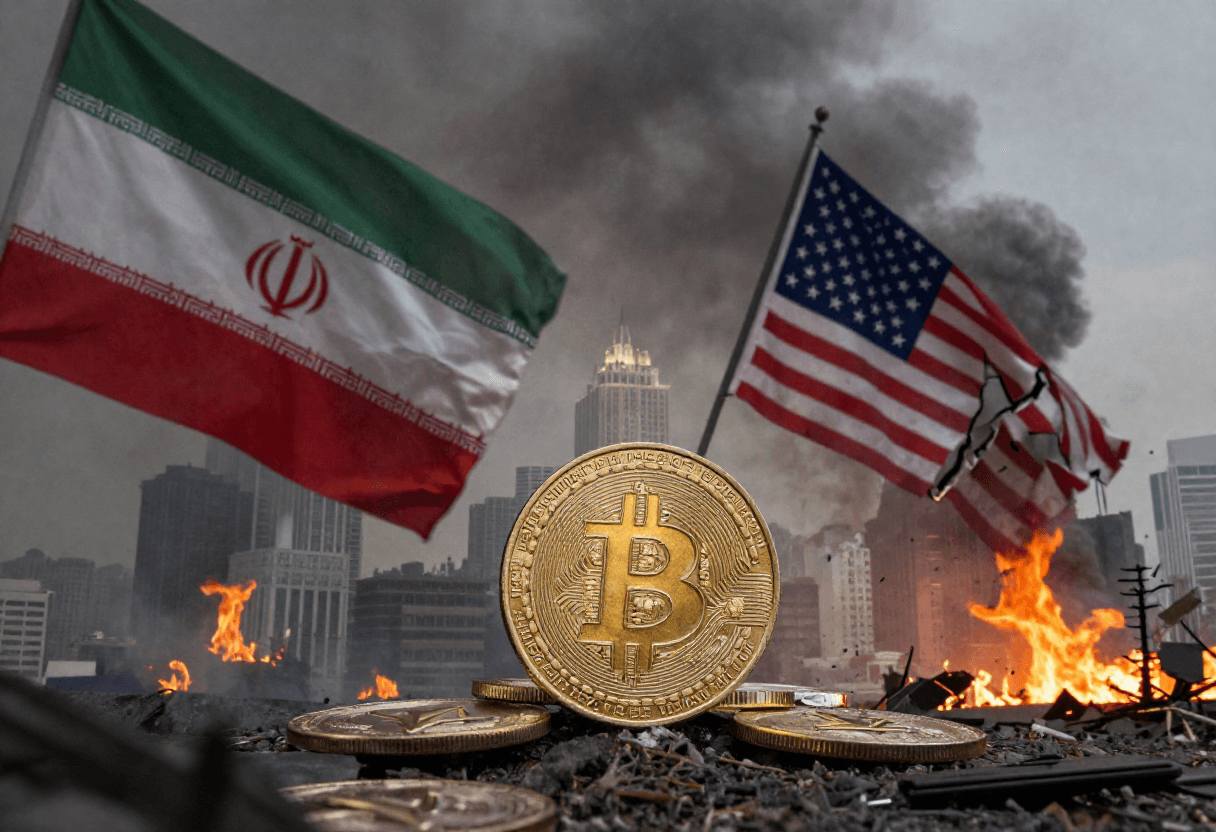
Why is Iran’s Bitcoin move shaking global markets?
There is a new geopolitical development that is quietly reshaping how investors think about cryptocurrencies. Reports indicate that Iran may require ships passing through the Strait of Hormuz to pay transit fees in Bitcoin.
This isn’t just another cryptocurrency headline. It represents a potential shift in how global trade is managed, especially in a region responsible for nearly 20% of global oil supplies.
If confirmed and implemented, it would mark one of the first cases of real use of Bitcoin in a nationwide economic strategy directly linked to energy markets.
What is happening in the Strait of Hormuz?
The Strait of Hormuz is one of the most important passages in global trade. Any disruption there immediately affects oil prices, shipping routes and financial markets.
Recent developments indicate:
- Iran asserts its control over transit conditions
- Ships may be required to pay a toll to be able to pass safely
- Reports indicate that payments can be requested in Bitcoin
- Hundreds of ships are currently facing delays in the region
Meanwhile, geopolitical tensions remain high, with threats of escalation involving multiple countries and trade restrictions.
👉 This is no longer just a military or political issue – it has become a financial issue.
Why Bitcoin? The strategic logic behind it
The choice of Bitcoin is not random. It solves several key challenges facing countries operating under financial stress:
- Resistance to sanctions: Bitcoin cannot be easily blocked by traditional financial systems
- Fast settlement: Payments can be completed within minutes globally
- Neutral Infrastructure: There is no central authority controlling the network
- Access to liquidity: Bitcoin can be converted into other assets around the world
For a country facing restrictions in the global banking system, Bitcoin becomes a viable alternative for enforcing payments in international trade.
Is this the beginning of a new financial system?
For decades, the US dollar dominated global oil trade. This system, often referred to as the “petrodollar,” has shaped global finance and monetary policy.
However, if oil-related transactions start incorporating Bitcoin or other cryptocurrencies, the implications could be massive:
- Shifting towards alternative settlement systems
- Reduce dependence on US dollar-based trade
- Increased demand for decentralized assets
- New regulatory and geopolitical tensions
👉 This could represent the first stages of a parallel financial system emerging alongside traditional markets.
How do cryptocurrency markets and traditional markets interact?
Interestingly, the markets are showing mixed signals:
- Bitcoin Maintains strength above key levels
- Ethereum Altcoins are seeing renewed momentum
- US stock markets rebound sharply
- Oil prices remain high due to concerns about supplies
This difference indicates that markets have not fully comprehended the long-term consequences of this development.
In other words, investors are reacting to short-term headlines, but the structural shift may still be underestimated.
What should investors watch next?
The situation is evolving rapidly, and several key factors will determine its impact:
- Whether Bitcoin payments are officially implemented
- How will world powers respond to this step?
- Potential sanctions or countermeasures
- Feedback from shipping and energy companies
- Regulatory responses to the use of cryptocurrencies in commerce
If more countries start experimenting with cryptocurrencies in international transactions, this trend may accelerate faster than expected.
Final Thoughts: A turning point for Bitcoin?
Bitcoin It has long been described as digital gold or a store of value. But this development signals the emergence of a new role – Bitcoin as an instrument of global trade and geopolitical strategy.
Although it is still early, the ramifications are significant.
👉 It’s not just about the cryptocurrency markets anymore.
👉 It’s about the future of global finance.


