
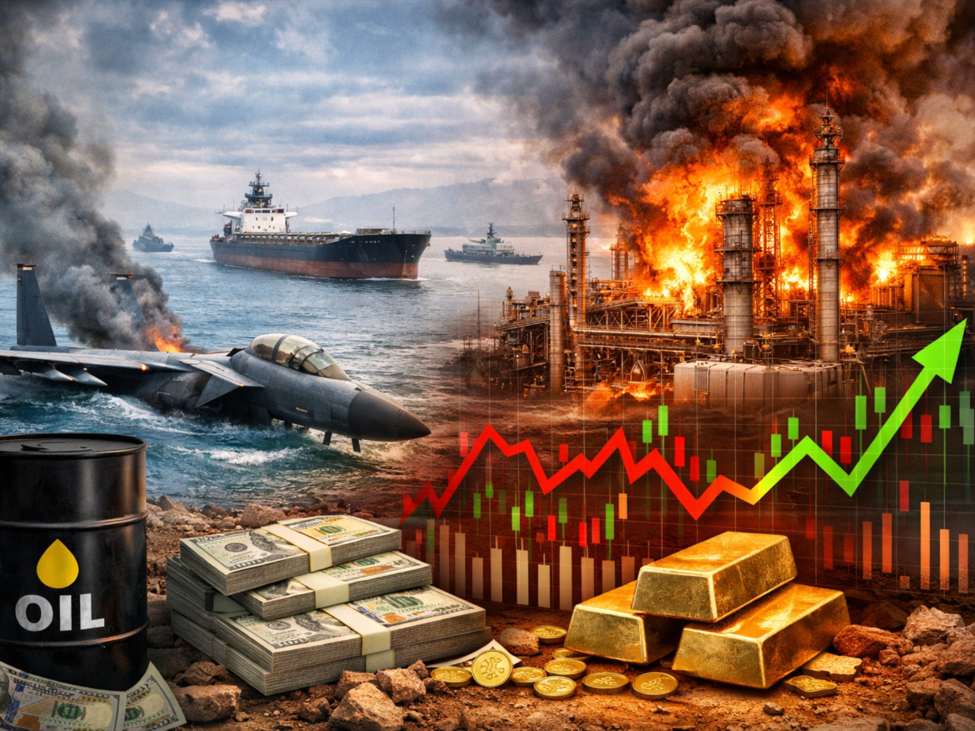
This is not a one-sided war. Iran has shown that it is still capable of responding. A US F-15E was shot down by Iranian fire, an A-10 was also hit during the rescue effort, and the broader conflict left 365 US service members wounded and 13 killed, according to Pentagon data reported by the AP. Iran also still uses the Strait of Hormuz as a means of pressure Reuters reported that US intelligence believes that Tehran is unlikely to loosen its grip on the waterway soon.
The search for the missing pilot from the downed F-15 is still ongoing I hope he finds his way to peace and returns to the arms of his family.
But Iran has also been hit hard over the past 48 hours. There were strikes on a petrochemical area in southwestern Iran that injured five people, a projectile that hit a sub-building near the Bushehr nuclear plant, killing one person, air strikes on bottled water storage depots in western Iran, a strike on a Red Crescent relief depot in Bushehr, and previous strikes that destroyed the new B1 bridge between Tehran and Karaj. Separate Reuters reports said that air strikes on the Iranian side of the Iraqi border resulted in the death of an Iraqi and the serious wounding of five others. More broadly, Reuters reported on March 27, citing the International Federation of Red Cross and Red Crescent Societies and the Iranian Red Crescent, that more than 1,900 people have been killed and at least 20,000 injured inside Iran since the start of the US-Israeli attacks.
One correction is also important to ensure accuracy regarding Iran’s strike on Oracle (ticker: ORCL) in Dubai. The oracle component should be toned down. Dubai authorities did not announce any casualties after debris from aerial intercepts hit the facades of two buildings, including the Oracle office in Dubai. This is more cautious and accurate than saying that Iran directly struck Oracle’s headquarters. The stock is still down 57% from ATH as of Sep 05, 2025, so I’m not sure he cares about this little hit in Dubai compared to other concerns he might have had.
Here is my simple opinion on the market:
Stocks. My reading is mixed, but definitely not on auto-crash mode like many of the voices I hear on social media. Global stocks were mixed rather than uniform this week, but fuel-sensitive areas such as airlines and transportation remain vulnerable when oil jumps. Energy names may hold up better. Defense stocks are not a guaranteed winner here either, because US defense stocks actually underperformed in March, as investors unwinded a crowded ‘buy conflict’ trade. Stocks like Intel are more bullish than bearish So a decline may have been found but we need to see if it holds up (like Intel’s $50 per share protection).
US dollar ($). The pattern was simple: Bad war headlines tend to help the dollar as investors seek safety, while hopes for a ceasefire weaken it again. So we still have the US dollar strengthening due to renewed escalation fears and a decline when ceasefire hopes rose briefly.
oil. This remains the market with the most obvious upside risk. Oil told short sellers “April Fools!”, rising more than 14% from April 1 to 2. Oil prices jumped after Trump’s latest threats, and intelligence assessments indicate that Iran is unlikely to give up its influence in the Strait of Hormuz soon. If pressure on the Strait continues, oil will remain the most visible pressure point for the global economy.
gold. Gold is supported by fear but not by a straight line. Gold can rise when the US dollar declines, but it may also fall when investors rush to cash in dollars. So the best way to think about gold here is “supported but volatile”, not “guaranteed every day”.
Your pocket at home. The first hit is usually fuel, flights and delivery costs. The second hit is groceries and household goods. Higher energy prices are already raising factory input costs, air freight rates, and food price pressures. It also reported that jet fuel in Europe has reached around $220 per barrel, which tends to quickly feed into airline tickets, and that natural gas prices in Europe and Asia are rising, which could lead to higher energy bills. Meanwhile, the Fed said on April 1 that households and businesses still appear to be treating the oil shock as short-lived rather than permanent, so the pain is real, but has not yet turned into a complete collapse in demand.
My conclusion in plain English is this: If the war remains hot and Hormuz remains constrained, oil is the clear winner, the US dollar maintains fear shows, gold remains volatile, and households feel it through gasoline, flights, utilities, and later food. If diplomacy suddenly gains steam, stocks could rebound quickly and the dollar could give up part of its safe-haven premium.


