
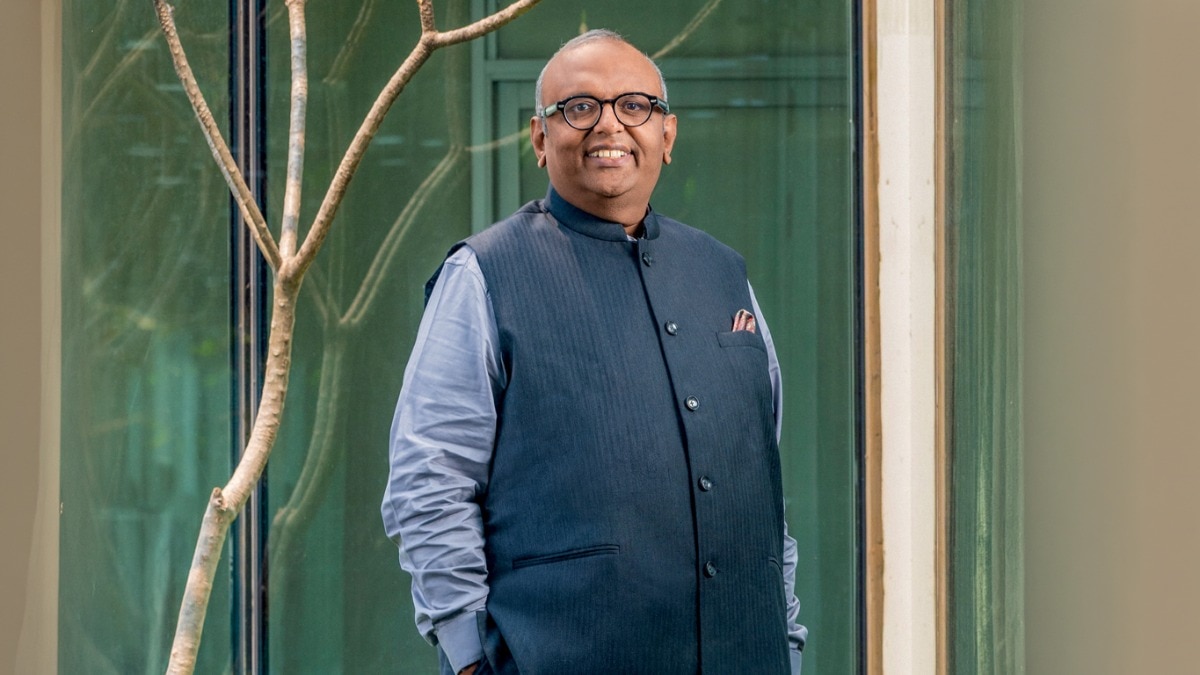
Aaron Alagappan’s passion for agriculture is clearly evident in how he concisely analyzes each issue. After all, the CEO of Coromandel International is as close as anyone at India Inc can get to; Offerings include fertilizers, specialty nutrients, crop protection, retail presence and technology plays.
Sitting in his spacious yet simple room in the Coromandel office in Chennai, Alagappan stresses his ongoing endeavour: to make Coromandel a “very cost-effective player”. After all, the company plies its trade in a sector that is tightly controlled, has slim profit margins, and requires a deep reservoir of patience; Obsessing over efficiency is the only way to guarantee strong returns.
For Alagappan – who moved to Coromandel in early 2021 after stints at other Murugappa group companies such as Cholamandalam Investment, TI Cycles of India and Parryware Roca – the switch to farming meant he had to go back to basics.
The last three years, in particular, have been crucial for Coromandel. “What we did right was strengthen the fundamentals of the company rather than going after only forward expansion,” he says. In these commodity-impacted businesses, there has been a disproportionate focus on two factors: operational innovation and supply chain resilience.
When Alagappan took over, Coromandel was importing 65% of its sulfuric acid needs. He and his team decided to explore how the company could add more value and boost profit margins by reducing imports.
The company considered every process and focused on mining. Alagapan says it can either own a mine or enter into long-term contracts with those who do. Towards the end of 2022, Coromandel acquired a 45% stake in Baobab Mining and Chemicals Corporation, a Senegal-based rock phosphate mining company, increasing that stake last July to 71.5%. This gave the company “mining-related capacity.”
Another major decision concerns securing critical raw materials. “It has gone from being a feature to being a cleaner,” says Alagappan. “We have invested time and leadership bandwidth to de-risk sourcing, deepen vendor partnerships and build resilience across our inbound supply chain to ensure we are able to serve the farm sector without interruption.”
Coromandel has also increased captive capacity for major inputs. “We have reduced the dependence on imports for key raw materials from about 65% to 40%. This has improved flexibility, reduced volatility and given us better continuity of supply,” says Alagappan.
The company also decided to make manufacturing excellence a priority. He has driven innovation in disciplined processes and eliminated bottlenecks across plants. “This has led to tangible improvement in production with minimal additional capital expenditure,” says Alagappan. “For example, we have been able to raise production volumes by about 20% in some facilities mainly through process and operating discipline.”
Apart from de-risking its supply chain, Coromandel has increased the breadth of offerings and strengthened its integrated agricultural solutions platform. “We are strong in manufacturing and market reach,” says Alagappan. “This includes large-scale food manufacturing, leadership in complex fertilisers, and having a pan-India distribution drive, with a deep last-mile presence through our rural retail network.”
Another factor that sets Coromandel apart is its portfolio-led model. This allows it to play across nutrients, crop protection, bio-based products and technology-led solutions. “It allows us to solve the broader crop outcomes problem rather than selling inputs into silos.” Finally, it focuses on the accumulated volume of real assets and depth of capabilities.
“India has high agrochemical diversity and sensitive agricultural economies. In such a scenario, the ability to adapt formulations, improve efficacy and deliver differentiated products quickly is a strategic advantage,” he says.
Every effort is an attempt to challenge the status quo and do things differently. “We didn’t understand rock mining but we got into it,” Alagappan says. “We added capabilities in sulfuric acid and phosphoric acid, which helped create the entire value chain and meet the need for raw materials.”
Together, these efforts have changed the approach at the company. Take, for example, the case of the plant in Kakinada, Andhra Pradesh, which went from being largely a mixing plant to a full-fledged plant. “We manufacture complex fertilizers using sulfuric and phosphoric acid. Next year, the site will become the single largest phosphate fertilizer making site in India,” says Alagappan.
On the retail side, its Gromor brand is opening a store every day and working to expand its reach. “As a company, we are very well established in Andhra Pradesh and Telangana and are touching border markets in Karnataka and Maharashtra,” he says.
Additionally, last March, Coromandel acquired a 53% stake in NACL, a crop protection company with a strong business in branded formulations, for Rs 820 crore. “We have got 14 new formulations in addition to the fungicides,” says Alagappan. “This is a difficult business to do.”
Those who follow the company seem to like the shift in the way the company operates. Motilal Oswal’s report released in February after Q3 earnings said the company is well positioned to sustain growth momentum in FY27 on the back of “favorable market dynamics, increasing shift towards NPK (nitrogen, phosphorous and potassium) fertilizers for balanced nutrition and strong growth in crop protection led by the synergistic benefits of NACL consolidation.”
The medium-term outlook remains strong due to five factors – expansion into new geographies, development of new molecules across the fertilizer and crop protection segments, reverse integration of the fertilizer business, purchase of NACL and expansion of Senegal-based Baobab Mining and Chemicals Corporation.
Crisil Ratings says the NACL acquisition was funded by internal cash accrual and Coromandel’s net post-acquisition liquidity of approximately Rs 450 crore as on August 31, 2025. “Given the expected strong accrual and no significant debt-financed acquisitions, Coromandel’s financial risk profile is expected to remain strong. This acquisition grows its crop protection business, strengthens its presence in the domestic formulations business, expands existing product portfolio and helps secure contractual manufacturing relationships with… Well-established NACL clients.
Coromandel is thinking like a technology company, Alagappan asserts. “Using predictive AI models, we try to find out what type of pests are in the area,” he says. This is a reflection of the changing nature of the Indian economy. “Farmers today are younger and more tech-savvy. I have seen some of them leave IT and go into agriculture.” This makes it necessary for Coromandel to adapt to those for whom WhatsApp is readily available and the technology is easily accessible. “These are not nice-to-have things,” he adds with a smile. “They are must-haves. The farmers are very advanced and do their research. Plus, they are all using ChatGPT.”
For Alagban, technology is closely linked to his focus on making the company stronger and more efficient.
@krishnagopalan


