
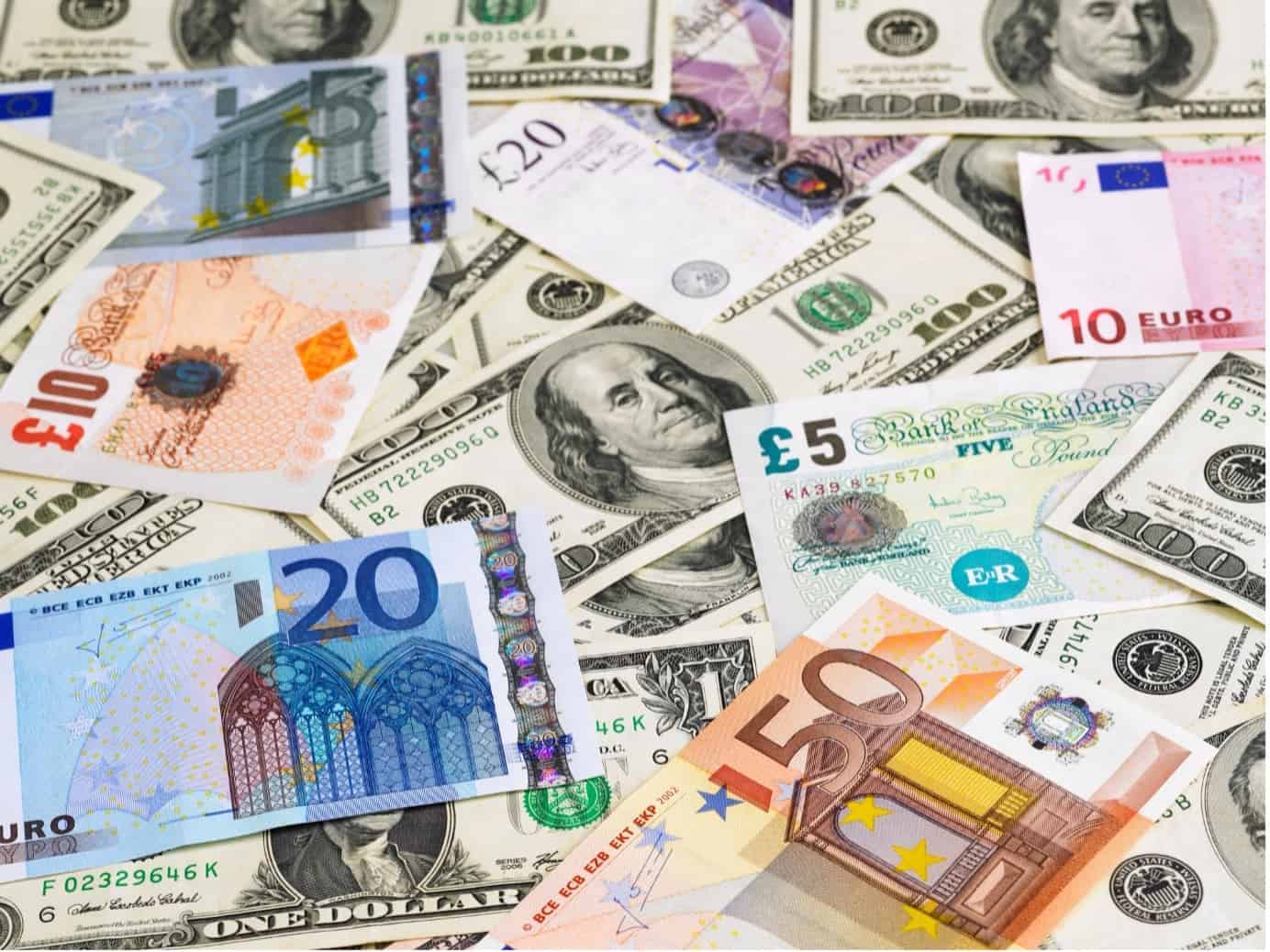


The foreign exchange (Forex) market is the largest and most liquid market in the world. Trillions of dollars worth of currencies are traded against each other on a daily basis, and for this reason, both beginners and experienced traders gravitate towards this lucrative market.
However, for a trader who is just starting out, it may initially be difficult to determine which currency pairs are best to trade, just because of the sheer number of pairs available.
In this article, we will take a look at the major currency pairs, the most traded pairs, and how to trade the major currency pairs.
What are the major forex pairs?
A currency pair consists of two different currencies, where the value of one currency is quoted against the other. Take EUR/USD, for example. The currency on the left (Euro) is called the base currency and the currency on the right is called the quote currency.
Major Forex pairs simply refer to the currency pairs that are most traded for speculative purposes or contribute to the largest volume related to economic transactions.
In general, there are three types of forex pairs: major forex pairs, minor forex pairs and exotic forex pairs.
The most popular major forex pairs
At present, there are four main forex pairs: EUR/USD, USD/JPY, GBP/USD, and USD/CHF.
As mentioned before, these pairs represent the most traded volume in the Forex market on a daily basis. However, the EUR/USD is the most traded currency pair in this group, accounting for more than 20% of all forex transactions, which also makes it the most popular pair among retail traders.
The remaining three major currency pairs are the US dollar versus the Japanese yen (USD/JPY), the British pound versus the US dollar (GBP/USD), and the US dollar versus the Swiss franc (USD/CHF).
Although these four pairs are considered the major pairs, some traders may argue that the USD/CAD, AUD/USD, and NZD/USD pairs should also be included in the list of major forex pairs.
These three pairs are also known as commodity pairs due to their commodity-based economies, and their trading volumes can sometimes exceed those of USD/CHF and GBP/USD.
Thus all of the most popular major forex pairs include the US dollar.
Related articles
How to trade the major forex pairs

Image is for illustrative purposes only
Before we discuss the basics of how to trade the major forex pairs, let’s take a quick look at what the quoted prices for a currency pair look like on a chart, and what it means for each specific currency when prices move up or down.
Since these currency pairs are heavily traded, the price quoted for the pair will fluctuate constantly. Fortunately for us, we can track these price fluctuations on a trading chart, as shown in the example above.
In this example, the value of the US dollar is quoted against the Japanese yen. When prices fall, the US dollar will fall compared to the Japanese yen (red arrow). The opposite is true when prices rise – for example, the US dollar will rise compared to the Japanese yen (green arrow).
The published prices for the currency pair are shown on the right axis of the chart (black arrows).
Let’s say the USD/JPY pair is trading at 136.00 – all this means is that it would cost 136.00 JPY to buy 1 dollar (USD).

Image is for illustrative purposes only
Our second chart example shows the bid and ask prices for the USD/JPY pair (on the right side of the image), indicating the best potential prices at which the USD/JPY pair could be bought and sold at that time.
When it is time to place a trade, the trader will first open an order box (similar to the one above) via the broker’s platform. The second step will be to determine the price at which the currency will be bought or sold.
Third, the trader must know the right order type to use, and finally the position size. Once all these factors are taken into consideration, the order can be placed via your broker’s platform and the order will become active if it is accepted by the market.
The chart image below shows an example of a mall.

Image is for illustrative purposes only
Our final chart image shows an open long position on EUR/USD. The blue horizontal line represents the price level at which the EUR/USD pair was bought.
The number 10,000 indicates the position size, and the green and orange horizontal lines represent the take profit and stop loss levels.
In this example, the EUR/USD price would need to rise for the position to become profitable, but a falling price would result in a loss until the stop loss level is reached or the position is manually closed.
Please note that the example above may differ in appearance from your broker’s platform. With most trading platforms, it is also possible to see these order levels within the Trade and Order panel (not shown in the example).
Before we end this article, here is a quick list of additional benefits that traders should know when trading the major forex pairs:
- Tight spreads: The difference between the buy and sell price, or spread, is often very small when trading major forex pairs. The smaller the spread on the currency pair, the better the liquidity. For example, exotic currency pairs generally have larger spreads.
- Great liquidity: Liquidity is directly related to volume, and is an important factor that traders take into consideration. The more liquidity there is in the market, the easier it is to execute large trades without affecting the price of the currency pair significantly.
- Less slippage: Slippage refers to situations where a market order or stop loss order is executed at a rate worse than the price it was specified for. This generally occurs when there is a sudden and rapid change in price during periods of high volatility. The risk of slippage is much lower in currency pairs with high volume/liquidity.
conclusion
The major forex pairs we mentioned earlier consist of currencies representing some of the largest and strongest economies in the world, which account for the majority of daily trading volume in the forex market.
Knowing which currency pairs have the highest trading volumes and the benefits they offer, such as tight spreads, liquidity and low slippage, will help any aspiring novice trader make better trading decisions.
Trade major forex pairs with top brokers
| mediator | Features | organizer | Platforms | Next step | |
|---|---|---|---|---|---|



