
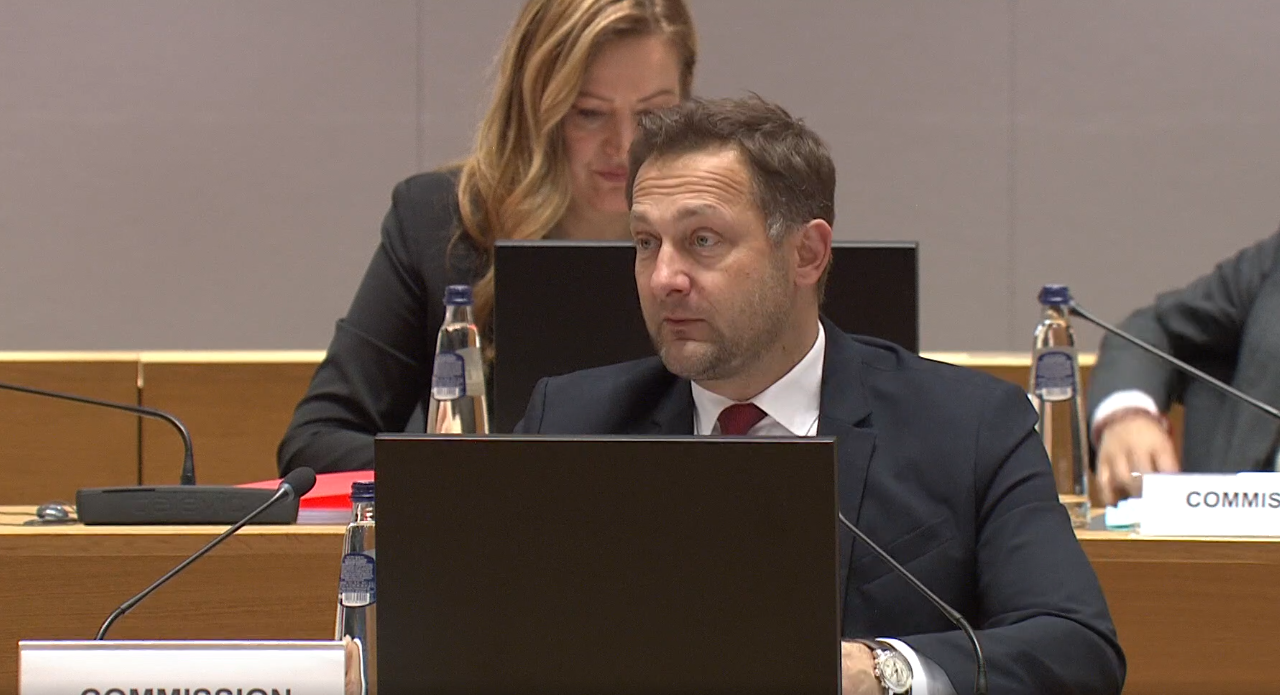
The European Commissioner for Agriculture has moved to reduce the possibility of the Carbon Border Adjustment Mechanism (CBAM) suspending fertilizer imports into the EU.
The CBAM is actually a tax on imports of carbon-intensive products into the EU, including fertilisers.
The CBAM Act requires fertilizer importers to pay for product import certificates.
However, due to rising prices and reduced availability of inputs as a result of the conflict in the Middle East, there are calls to suspend CBAM when it comes to fertilisers.
Agriculture, Food and Marine Minister Martin Haydon was among those who made such a call, saying yesterday (Monday 30 March) Before the meeting of EU agricultural ministers: “CBAM risks adding another layer of fertilizer cost inflation, which is why Ireland supports providing a mechanism to temporarily suspend the application of CBAM to fertilisers, and for this to be done in the quickest way possible.”
However, European Commissioner for Agriculture Christoph Hansen, who also spoke at the meeting, appeared to have no interest in the idea.
The Commissioner told EU agriculture ministers: “Suspension of CBAM on fertilisers, if there is a legal basis for doing so in the future, risks exacerbating dependence on imports and we must therefore be very careful on this issue.”
The Commissioner also confirmed that he will meet stakeholders in the EU fertilizer sector on 13 April with a view to development EU Fertilizer Action Plan announced earlier in March.
Speaking at a press conference after yesterday’s meeting, Commissioner Hansen outlined some of the actions the Commission has already taken on fertilizer availability, including suspending tariffs on some fertilizers from countries other than Russia and Belarus, and Reduction of the default profit margin on the value of fertilizer imports under the CBAM.
“The Commission is working hard to develop an upcoming action plan for fertilizers later this spring, and it is in this context that I am calling for an urgent high-level meeting on 13 April with stakeholders,” the Commissioner said.
He said the plan’s focus would be on “short- and long-term structural measures”, supporting EU fertilizer production to reduce EU dependence, “but also to support farmers to use fertilizers more efficiently, and replace mineral fertilizers with bio-fertilizers and low-carbon fertilizers.”


