

author
Ahmed Balaha
author

Share

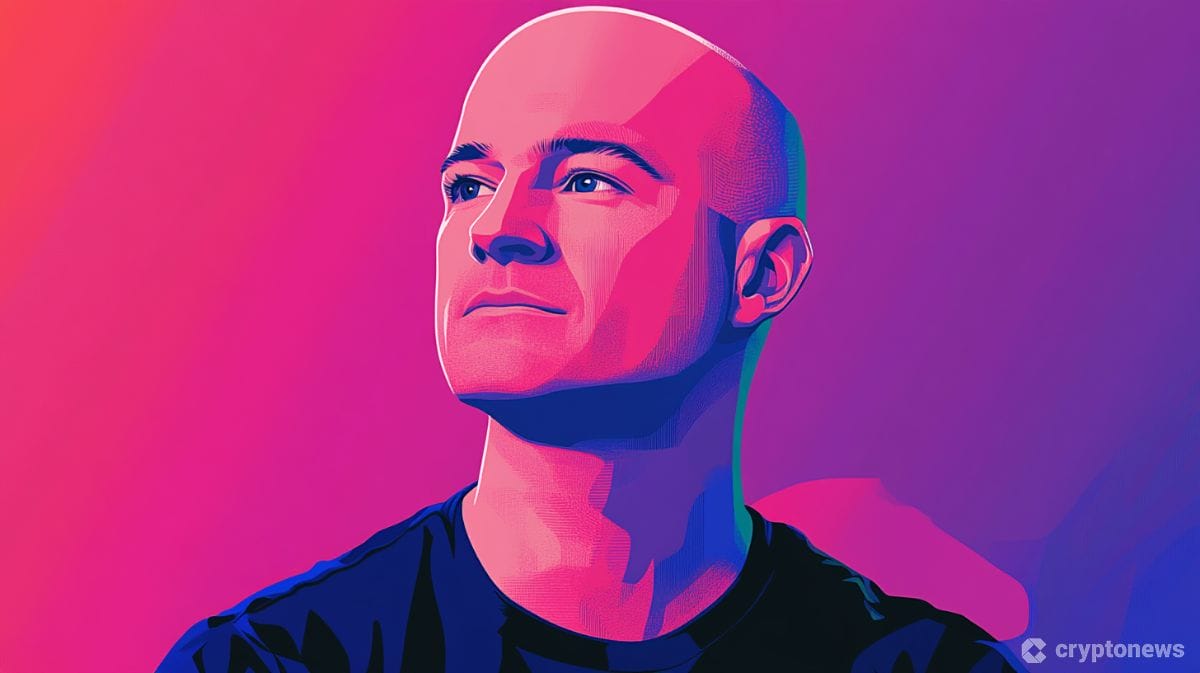
Brian Armstrong has personally put himself on the line regarding Bitcoin’s quantum resistance, pledging to directly oversee Coinbase’s quantum cryptography research and implementation efforts as the threat moves from theoretical to timestamped.
The commitment signals that Coinbase is no longer treating quantum risk as a long-term problem for someone else’s roadmap.
Urgency is not manufactured. Google Quantum AI and Caltech research, published in late 2025, modeled an advanced hypothetical quantum computer that cracks Bitcoin’s encryption in less than nine minutes — barely inside the network’s 10-minute block confirmation window.
Armstrong’s personal involvement is a direct institutional response to this narrow margin.
Key takeaways:
- Armstrong Commitment: Coinbase CEO Brian Armstrong has pledged to personally oversee the exchange’s Bitcoin quantum resistance initiatives, including collaborating with Bitcoin Core developers through the newly formed Quantum Advisory Board.
- Threat window: Google Quantum AI research is modeling a cryptographically relevant quantum computer that breaks Bitcoin’s encryption in less than nine minutes – within the 10-minute block time – with Google targeting quantum readiness by 2029.
- Protocol reality: Bitcoin’s decentralized governance requires community consensus through the BIP process for any crypto upgrade — making Coinbase’s developer-facing involvement more important than a unilateral exchange decision.
- Industry alignment: MicroStrategy’s Michael Saylor and Coinbase’s CSO Philip Martin are actively contributing to quantum resistance efforts; BTQ Technologies deployed the quantum-resistant Bitcoin Core testnet in early 2026, with mainnet planned for Q2 2026.
- What to watch: The launch of BTQ Technologies’ mainnet in Q2 2026 and the first published migration standards of the Coinbase Quantum Advisory Board are two near-term signals that will indicate whether institutional momentum is translating into protocol-level action.
Discover: The best cryptocurrencies you can get right now
The quantum threat to Bitcoin is specific – and the clock is ticking
The security of Bitcoin encryption is based on the discrete logarithm problem with an elliptic curve. Google Quantum Research Other blockchain ecosystems have already accelerated post-quantum crypto transitions, and Bitcoin – the most valuable target – faces the most exposure.
The specific mechanism is Shor’s algorithm: running on a sufficiently powerful quantum computer, it can extract a private key from an exposed public key, which is exactly what happens when a Bitcoin address transacts on the chain.
Older Pay-to-Public-Key-Hash addresses are the most vulnerable. SegWit and Taproot addresses provide partial coverage — the public key is not broadcast until spending is done — but this protection evaporates the moment the funds move. NIST finalized its first post-quantum encryption standards in 2024, establishing network- and hash-based signature schemes as the basic framework. Bitcoin has not adopted any of them yet.
This gap — between available cryptographic tools and Bitcoin’s actual protocol — is the structural problem that Armstrong is positioning Coinbase to help bridge.
Discover: The best cryptocurrency presales now
What Armstrong’s personal censorship actually means — and why Coinbase’s institutional weight changes the calculations
Armstrong’s commitment is not a journalistic one. According to reports about the initiative, Coinbase has created a quantum advisory board that includes Bitcoin Core developers, with a clear mandate to develop migration standards before crypto-related quantum computers arrive.
Coinbase Chief Executive Officer Philip Martin described the situation as an “urgent issue” that requires industry consensus — and noted that post-quantum cryptography exists, but that Bitcoin is lagging behind other chains in its adoption.
This distinction is important. This is not Coinbase upgrading its infrastructure in isolation – a task that any well-resourced exchange can accomplish internally.
The advisory board structure is designed to feed into Bitcoin’s improvement proposal process, the community consensus mechanism through which any protocol-level cryptographic change must pass. Coinbase, through its engineering resources and developer relationships, is positioning itself to formulate and test BIPs specifically aimed at post-quantum transformations.
The institutional logic is transparent – and legitimate. Sovereign wealth funds and long-term institutional distributors weigh generational risk differently than retail traders.
Investor Kevin O’Leary clearly pointed to quantitative uncertainty as a factor that could prevent institutional Bitcoin allocations.
By addressing 10-20 year risks today, Coinbase signals the seriousness of custody for exactly the capital it wants to attract. Coinbase’s latest regulatory website It follows the same pattern: engagement at the institutional level on key issues before pressure becomes acute.
MicroStrategy’s Michael Saylor is contributing to the quantum resistance effort alongside Armstrong — adding significant Bitcoin treasury credibility to what could be read as an exchange-based initiative.
Casa’s Jameson Loeb, who has closely followed these risks, estimated that a full transition of the network to quantum-secure addresses would require years of coordination between wallets, custodians, and users. Armstrong’s involvement doesn’t push any of that timeline on its own.
What it does is add institutional momentum to the process that was previously lacking.
Explore: Best pre-launch token sales with asymmetric upside potential


