

John Deere is celebrating 25 years of automated steering, reflecting the rapid evolution of precision farming technologies from early parallel tracking to today’s more precise connected field operations.
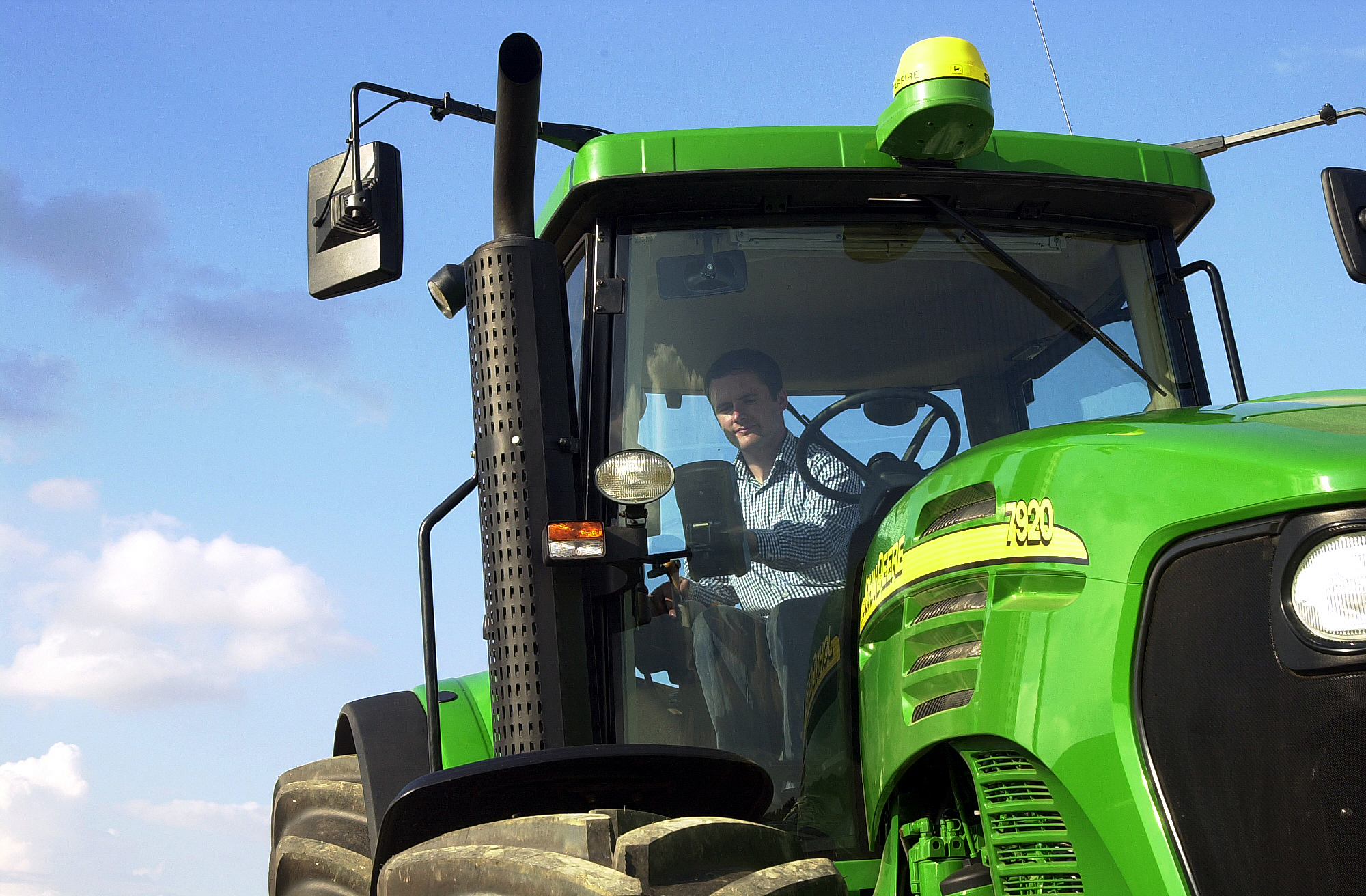
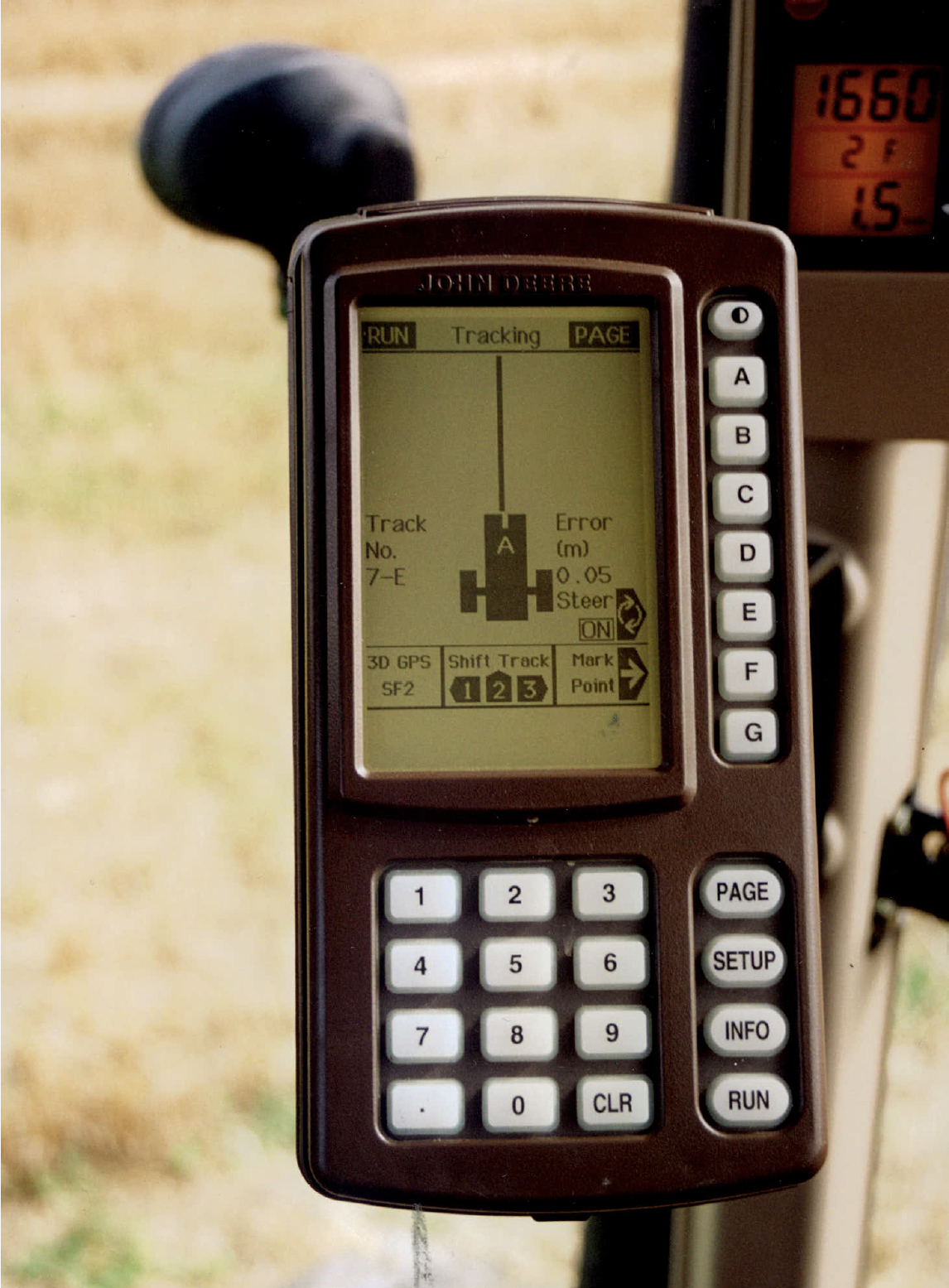
John Deere’s journey began in 2001 with the launch of the first StarFire receiver and GreenStar display.
These provided visual guidance to help operators steer more accurately and consistently.
For the first time, the in-cab display can indicate whether the operator should steer left or right, supporting parallel tracking and improving passing accuracy.
This was followed by a major next step in 2002 with the launch of AutoTrac, which enabled GPS-assisted automatic steering that could keep machines on track autonomously – initially with 30cm accuracy.
By 2004, John Deere introduced AutoTrac technology with RTK, increasing steering accuracy to ±2.5 cm.
This allowed tractors and harvesters to reliably follow the same paths over multiple seasons.
This was certainly an advantage for operations where repeatability was important, including row crop production, hoeing, and soil-friendly field passage strategies.
Directional innovation continues
Autosteer continued to advance beyond routing.
In 2020, John Deere launched AutoPath rows, designed to record the actual paths driven for each row unit and enable accurate redundancy.
More recently, since 2024, AutoPath Boundaries has made it possible to automatically calculate and create optimized paths for the entire field based on its boundaries.
This can be done either from the in-cab display or via the John Deere Operations Center, including the header.
Real-time data exchange
Advances in routing have been met with an equally radical change in data recording and communication, according to John Deere.
Screenshot
In the early days, digital field documentation could literally be like “data in a pocket”: FieldDoc stored fieldwork on a keycard that had to be read by hand in the office.
Today, data transfer is designed to be automated.
JDLink modems transmit real-time information to your smartphone, tablet or computer, enabling a more connected approach to decision making and machine management.
Fleet-wide synchronization
With Data Sync, any newly added guideline or limits, product or equipment is automatically synchronized across the entire fleet and John Deere Operations Center.
This means that information critical to carrying out field work is always up to date and accessible to all operators.
As accurate documentation data becomes increasingly important, in 2022 John Deere introduced the Work Planner tool where farm managers can store setup information online for upcoming field work and send it to the fleet wirelessly.
Once the driver crosses the field boundary, the displays will automatically load all the necessary information without operator intervention, and the machine is ready to go.
Today, John Deere reports more than 1 million digitally connected devices, calling it one of the largest connected fleets in the world.
Hardware development
The 25-year journey is also reflected in the development of key micro-instruments.
Since the original GreenStar Display (2001), display generations have progressed through Generation 2 (2005), Generation 3 (2011), Generation 4 (2014), and Generation 5 (2023).
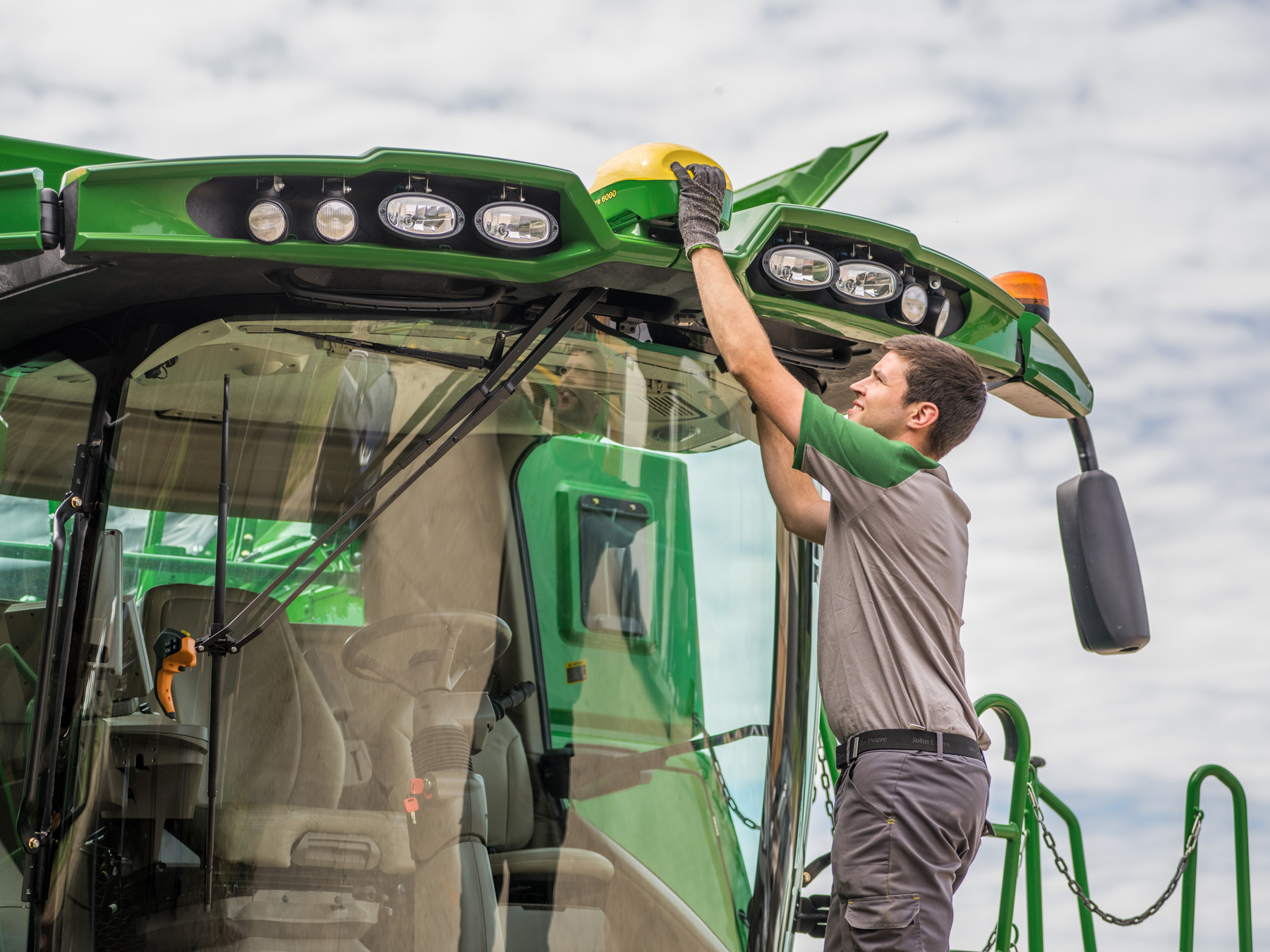
Receiver development has followed a similar path, from the original StarFire (2001) to the StarFire iTC (2004), StarFire 300 (2008), StarFire 3000 (2010), StarFire 6000 (2016) and the latest StarFire 7500 (2024).
“Over the past 25 years, precision agriculture has moved from early visual guidance and manual data handling to an integrated, automated workflow,” said Peter Koch, production system marketing manager at Precision Technologies.
“From key cards to cloud connectivity, from routing support to highly accurate routing and automated route creation, the goal has remained the same: to make field work simpler, more accurate and more efficient.”
From first-generation displays and guide receivers to modern systems that combine the creation of automated guide lines, John Deere’s meticulous technological evolution underscores how far the industry has come in a quarter century.


