
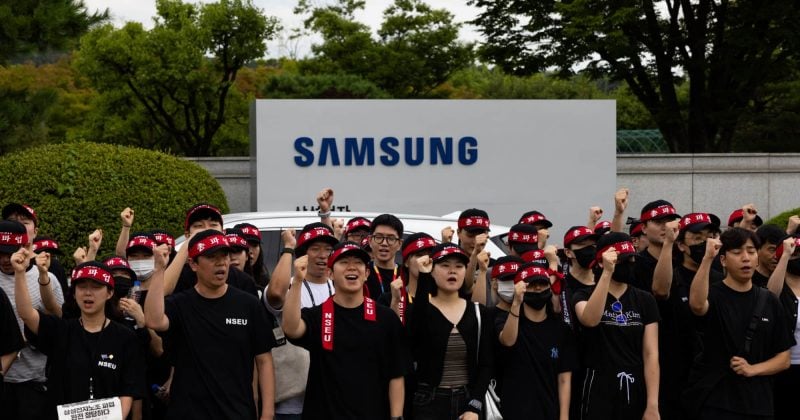
Samsung Electronics Co and its largest labor union return to the negotiating table on Monday, in a race to prevent a strike that could idle tens of thousands of workers at the world’s largest memory chip maker.
The National Samsung Electronics Union (NSEU) has set a deadline of May 21 to strike for up to 18 days if the two sides cannot close the widening gap in bonuses and wages. An estimated 41,000 to 50,000 workers are expected to participate if the talks collapse.
What is the fight actually about
The main disagreement is over how Samsung shares its profits with the people who make the chips. The union wants to allocate 15% of the company’s operating profits to performance-based bonuses, and wants to remove the current 50% cap on such bonuses entirely.
Samsung management responded with a 10% allotment plus a one-time payment in 2026. The gap between the two positions is large, and government-brokered talks have already stalled once after nearly 17 hours of discussion.
The union has taken a hard line, stating that it will not return to the talks unless Samsung meaningfully improves its offer.
A pattern, not an anomaly
Samsung workers staged their first-ever strike in June 2024. Additional strikes followed in July and November last year.
The South Korean government is monitoring the matter closely. The authorities may resort to emergency arbitration powers to prevent a strike, and consider the broader economic consequences of the prolonged closure of one of the country’s most important companies.
Why does this matter outside of Samsung’s campus?
Potential losses resulting from operational disruptions could exceed KRW 40 trillion, or approximately $28 billion.
Global demand for semiconductors remains strong, driven largely by the build-out of artificial intelligence infrastructure. Samsung’s DRAM and NAND flash products are located at important points in that supply chain.
For the cryptocurrency and blockchain sector specifically, constraints on semiconductor supplies have historically translated into higher mining hardware costs and delays in the availability of next-generation chips.


