
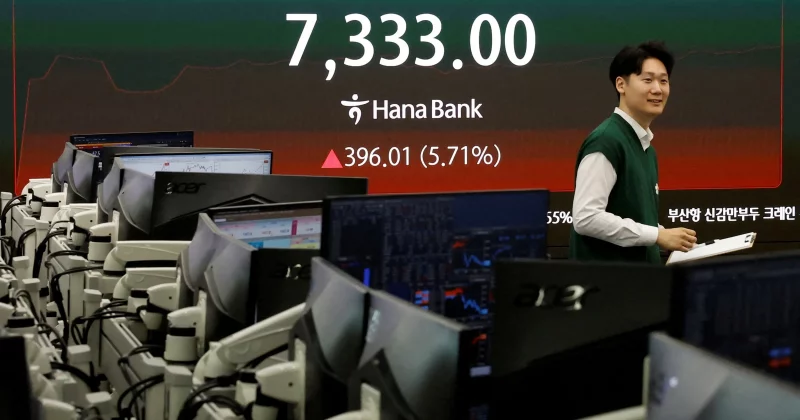
One post on Facebook. That’s all it will take to wipe billions off the South Korean stock market on May 12, 2026.
Kim Yong-beom, a senior presidential policy advisor, has floated the idea of ”citizen dividends” funded by taxes on profits from the country’s booming semiconductor sector. The KOSPI responded with a drop of as much as 5.1% on the day, with chipmakers Samsung and SK Hynix leading the selling. The government was quick to clarify that the proposal was Kim’s personal opinion, not official policy, and the index recovered some losses to close down about 2-3%.
What the proposal actually said
Kim’s idea was not to impose new taxes on South Korea’s chip giants. Instead, it focused on redistributing existing tax revenues generated by artificial intelligence and semiconductor profits and turning them into national gains for citizens. Consider Alaska’s Permanent Fund model, where oil revenues are divided among residents, except for profits flowing from South Korea’s dominance of semiconductors.
South Korea’s semiconductor exports will reach $141 billion in 2025. This is an enormous wealth driver concentrated in a few companies. Kim’s argument, brilliantly shared in a social media post, was that ordinary citizens should get a share of the windfall.
Market repercussions and government retreat
Semiconductor stocks bore the brunt. Samsung and SK Hynix, which together account for a significant portion of KOSPI’s total market capitalization, saw investors rush in for the exits. The fear was clear and direct: if the government redirected corporate profits into profits for citizens, after-tax profits would shrink, valuations would fall, and foreign capital would find somewhere else to settle.
The president’s office moved quickly to contain the damage. Officials explained that Kim’s post reflects his personal views and does not represent any planned government action. This reassurance helped the KOSPI recover from its lows, although it closed with a loss of 2-3%.
South Korean experts have been vocal about the need for proactive government policies that address how AI and semiconductor wealth is distributed. Kim’s post did not come out of nowhere. It tapped into an ongoing national conversation about economic justice in an era in which a handful of tech companies are pocketing huge gains while wage growth for most workers remains flat.


