
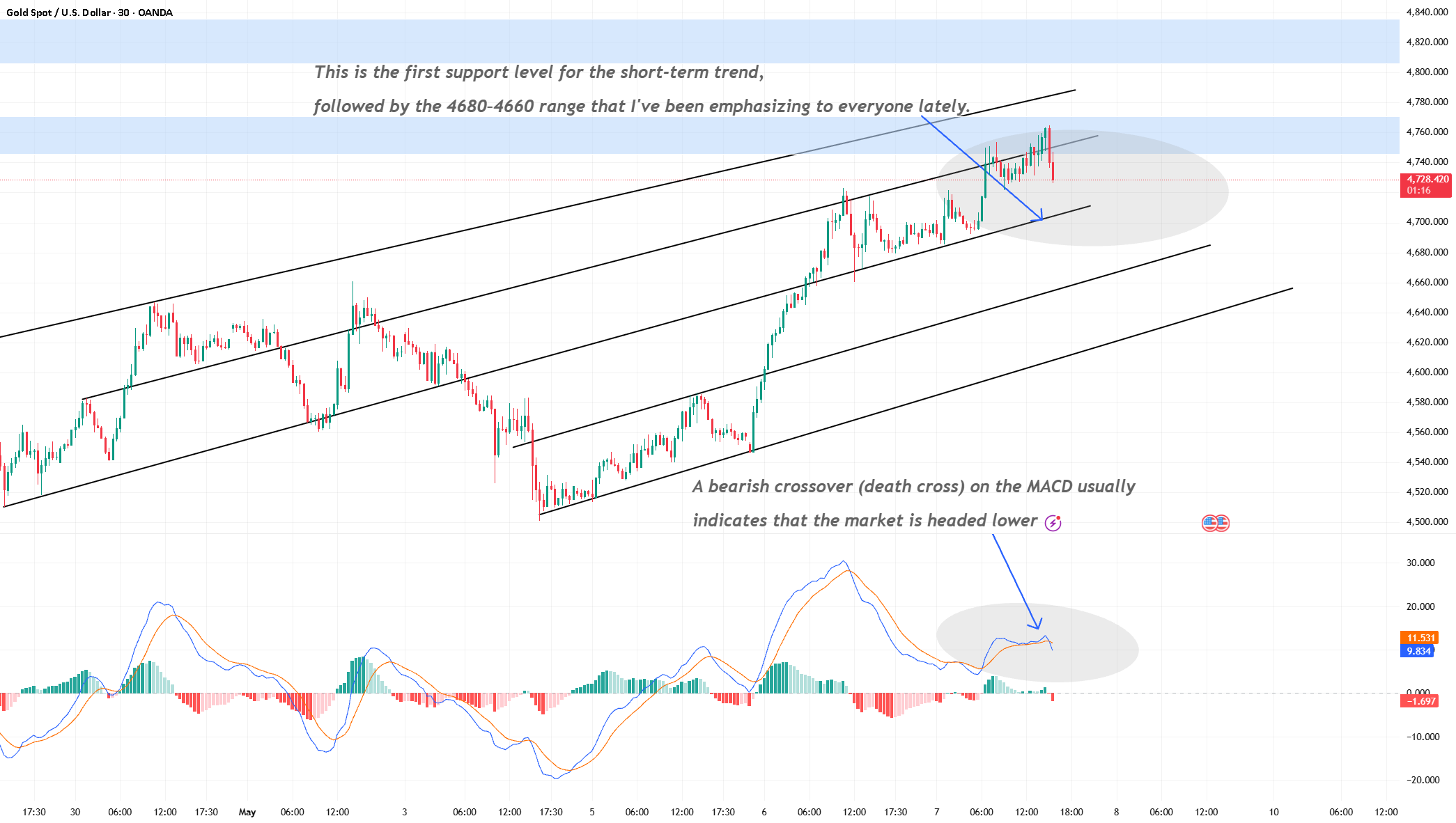
This type of price action today reflects a few things: uncertainty ahead of key data, bullish daily structure but strong overall resistance, discord between bulls and bears, marginal capital waiting for clarity, and ongoing negotiations between the US and Iran. All of these factors combined have led to the current high-profile merger.
On the technical side, the 30-month chart is showing some fatigue, but the support below is thick. The main question is: Will the market correct through a pullback, or will it continue to digest gains sideways? A stronger scenario – another step up – is also possible.
It should be noted that key data is scheduled for release tomorrow. Markets generally expect the labor market to cool down in April. However, recent employment data has been very volatile, with frequent large revisions. Whether March’s data is revised downward may actually be more important than April’s headline number. If revised lower, it would confirm that the labor market deterioration has already begun, strengthening the bullish case for gold in the medium term.
Beyond the data itself, the market’s focus has shifted from a simple “good versus bad” reading to the risk of “stagflation.” If the data is weak — especially a sharp decline in payrolls — recession fears could flare up immediately. Here’s the key: If average hourly earnings are still rising at the same time, it means the “weak jobs + flat inflation” scenario will be confirmed. This would be the most bullish outcome for gold.
Stagflation is very bullish for gold because it puts the Fed in a dilemma: lowering interest rates would fuel inflation, while raising interest rates would hurt the economy and increase the debt burden. This political paralysis would fully activate gold’s safe-haven and inflation-hedging properties, pushing prices back towards previous highs.
Putting it all together: Gold will likely remain in a high-level consolidation mode ahead of the data release. Keep a close eye on the 4720-4700 support area. Also watch for signs that the market is pre-pricing the data. If so, the post-data movement could be relatively weak – which would reduce trading difficulty, but also put pressure on profit potential for those who take a conservative approach.
No matter how the market goes, remember just one thing: trade what you understand. This is how the odds are tilted in your favor. When the picture is not clear, watch more and trade less – be rational.


