
Every organization goes through a journey where numbers stop being numbers on a balance sheet and start telling a story. For Bharat Electronics Limited (BEL), that moment is now.
Over the past few years, the Bengaluru-headquartered defense electronics major has gone from being a strong and established supply unit to one of the most aggressively managed and closely watched companies in the strategic sector in India.
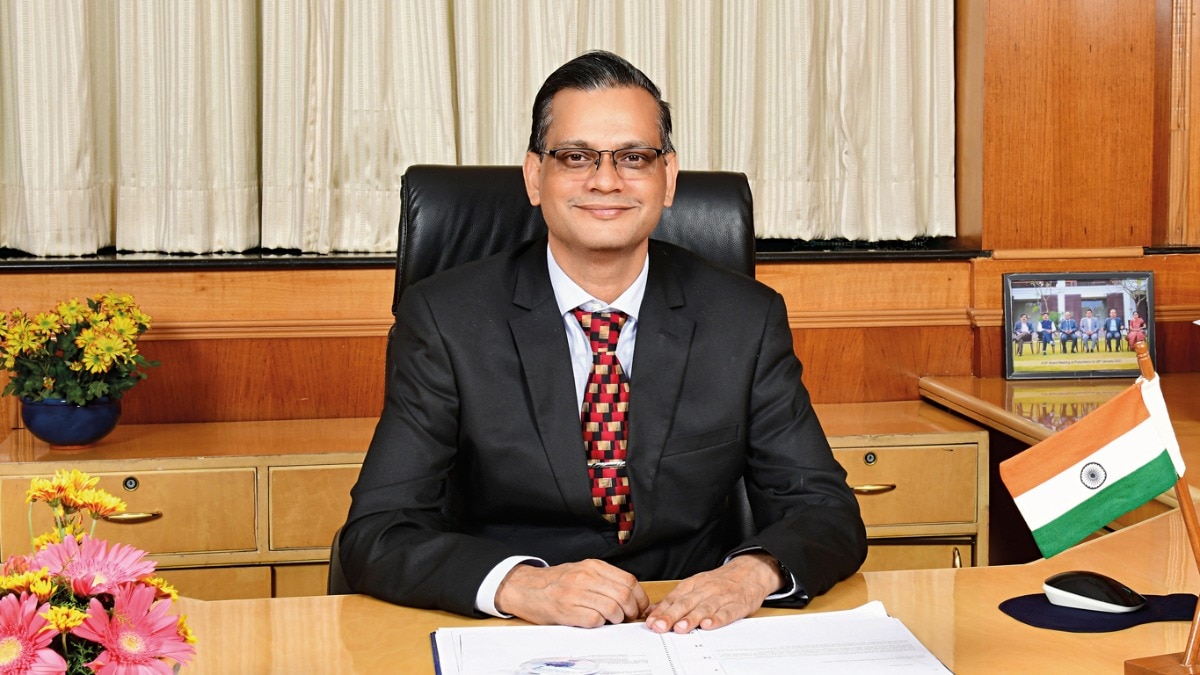
What has changed is not just favorable political winds; It is the leadership and its committed employees. Manoj Jain, who took over as Chairman and Managing Director in June 2024, is a BEL pioneer with a technology pedigree.
A Gold Medalist in Electronics Engineering from REC Jaipur (now MNIT), he joined BEL in 1991 as a probationary engineer and spent three decades in the trenches of communications equipment, electronic warfare and avionics, culminating in the role of Director (R&D) before moving on to the senior role.
Jain has repeatedly emphasized that BEL’s strategy is based on roadmaps for “future products and technologies, establishing intellectual property rights, and acquiring key technologies,” with the goal of keeping the company at the forefront of defense electronics. Under his leadership, R&D was no longer treated as discretionary spending; BEL has consistently invested 6% to 7% of its revenues in research, a level more often associated with private technology players than PSUs.
In terms of numbers, it’s hard to miss the shift. The PSU recorded strong total sales of Rs 23,769 crore in FY25, with a return on equity of 29.13%. Profit after tax increased at an accelerated pace — from Rs 3,943 crore in FY24 to Rs 5,287 crore in FY25.
The company is completely debt-free today, has no long-term borrowings and has a debt-to-equity ratio of 0.0x during FY21-25. As of October 1, 2025, BEL’s order book stood at Rs 74,500 crore with Rs 12,500 crore of new orders received since the beginning of FY2026. The management has directed total order flows worth Rs 57,000 crore in FY26, including Quick Response Surface-to-Air Missile (QRSAM) orders worth Rs 30,000 crore.
BEL has been quietly building up local capabilities in radars, communications and electronic warfare systems. Pioneering programs such as the Akash air defense system, weapons locator radars, and coastal surveillance systems fall squarely within this narrative of self-reliance.
Even when supply chains were under pressure, BEL chose to create new strategic business units and expand manufacturing. In the past two years, it has established central business units in areas such as electronic warfare, unmanned systems and advanced communications, and supported them with new factories and testing facilities.
The company is turning partnerships into an advantage rather than treating private players as enemies. It has actively signed memorandums of understanding and technology transfer agreements with DRDO laboratories and private companies, deepening its access to new technologies and expanding its ability to implement complex programmes.
According to financial services firm Elite Wealth, part of InCred Capital, BEL’s position is difficult to replicate. It has seven decades of well-established relationships with the armed forces and DRDO, and 29 strategic business units spread across nine manufacturing sites, covering radars, marine systems, electronic warfare, avionics, communications and homeland security under one roof.
Perhaps its pinnacle was the deployment of the Integrated Drone Detection and Interception System, designed by DRDO and manufactured by BEL, during Operation Sindoor. This laser-based system destroyed many low RCS aircraft and played an important role in the success of the operation.
For BEL, budget expenditures translate into deep track. According to ScanX, a stock analysis tool from Dhan, QRSAM alone is expected to generate orders worth around Rs 30,000 crore, with BEL as the key systems integrator.
The company has guided revenue growth of over 15% in FY26, supported by expected order flows of over Rs 27,000 crore and a strong execution run rate on its existing book of over Rs 70,000 crore.
However, there is a broader story here that goes beyond orders and footnotes. BEL shows that a PSU, when anchored in technology, disciplined in capital allocation and honest about its constraints, can multiply value.
Under Manoj Jain’s leadership, the company has not only been riding the wave of Atmanirbhar Bharat, but has helped shape the defense electronics ecosystem in India. This is perhaps the reason why he won in the Bharat PSU Icon category in BT-PWC India’s list of Best CEOs of 2026.


